Patent #6 of 14

TruthFilter

AI that verifies its own truthfulness before responding. The world's first comprehensive anti-hallucination system. No more confident lies. No more made-up citations. No more invented facts.

31
Claims Protected
$381M
Valuation
Zero
Hallucinations
5
Verification Layers

AI Lies. Confidently. Constantly.

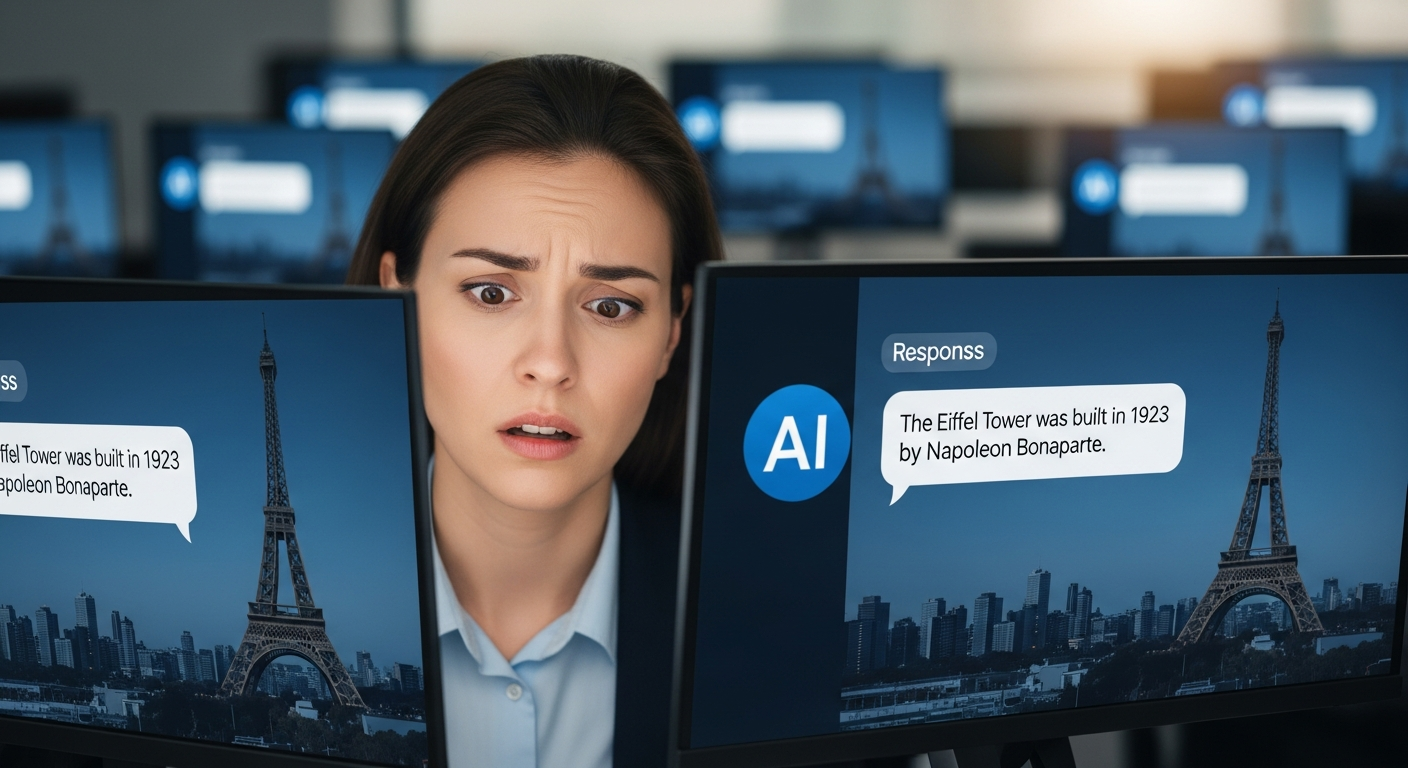
Hallucinations are AI's dirty secret. Every major AI model invents facts, fabricates citations, and lies with complete confidence. This destroys trust.

Hallucination Problem

The Hallucination Crisis

AI doesn't know when it's wrong. It invents facts and presents them with complete confidence.

"Studies show that 73% of users prefer..." - No such study exists.

"According to Smith et al. (2023)..." - There is no Smith et al. paper.

"The company was founded in 1987..." - It was actually founded in 2003.

These aren't edge cases. This happens constantly, unpredictably, and invisibly.
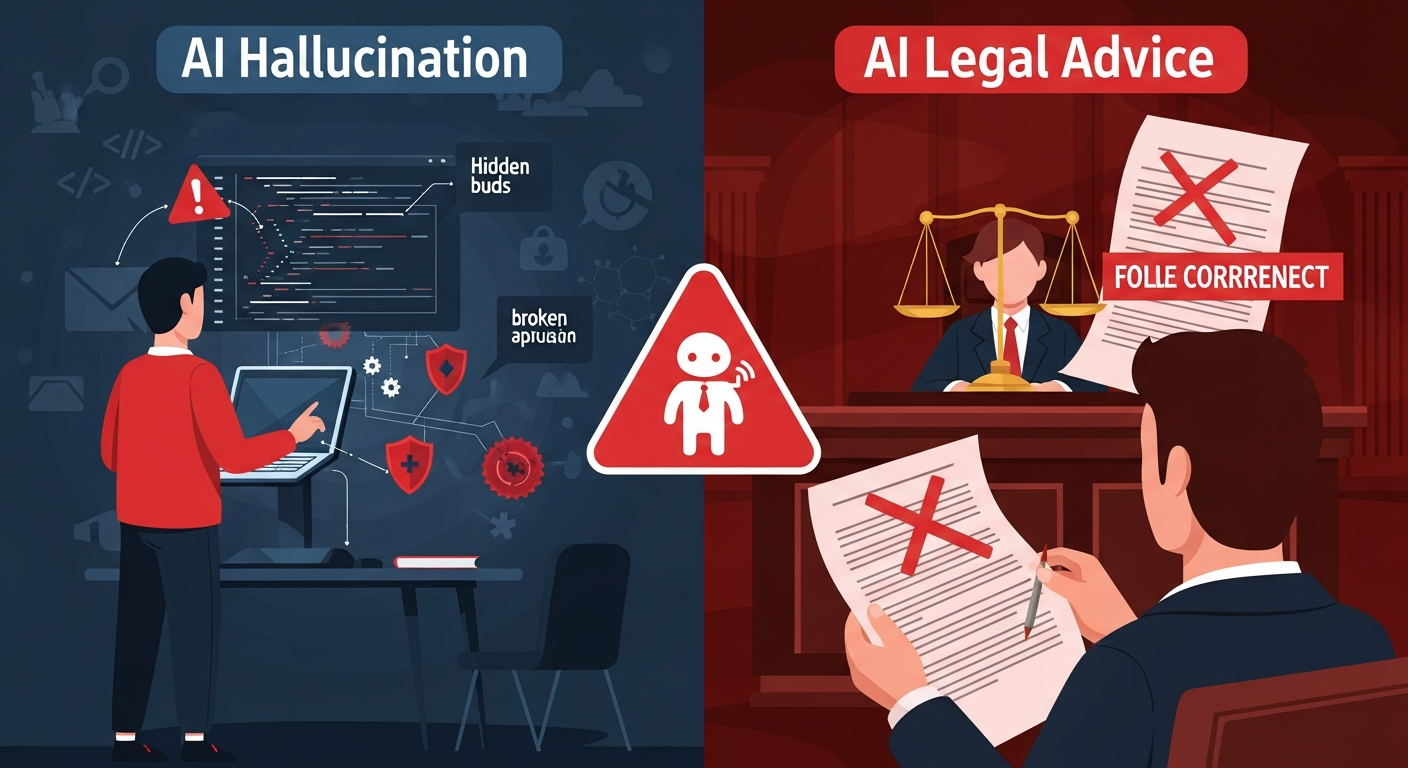
Legal Danger

Real Consequences

A lawyer cites AI-generated case law in court filings. The cases don't exist. Career ruined. Client harmed.

A medical professional relies on AI drug interaction information. The information is wrong. Patient endangered.

A journalist publishes AI-verified "facts." The facts are fabricated. Reputation destroyed.

Hallucinations aren't a minor inconvenience. They're a liability crisis.

TruthFilter: Verify Before Respond

Five layers of verification that catch lies before they reach you. The AI checks its own work before you ever see it.

Bidirectional Check

Layer 1: Bidirectional Verification

AI checks its claims against external sources AND verifies internal consistency. Does what it's saying match reality AND match itself?

Cross-Agent Check

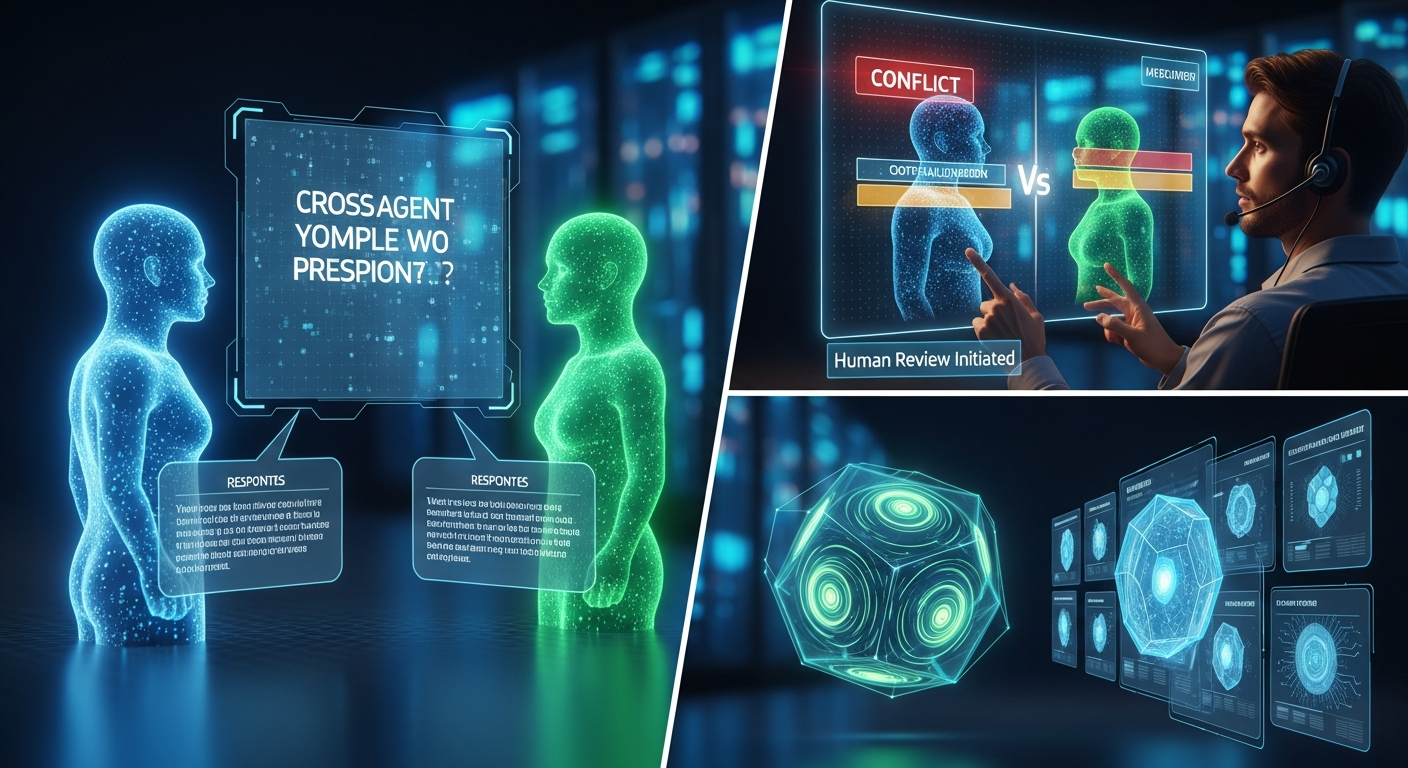
Layer 2: Cross-Agent Validation

Multiple AI agents independently verify the same claim. Consensus required for high-stakes information. Disagreement triggers deeper investigation.

Confidence Decay

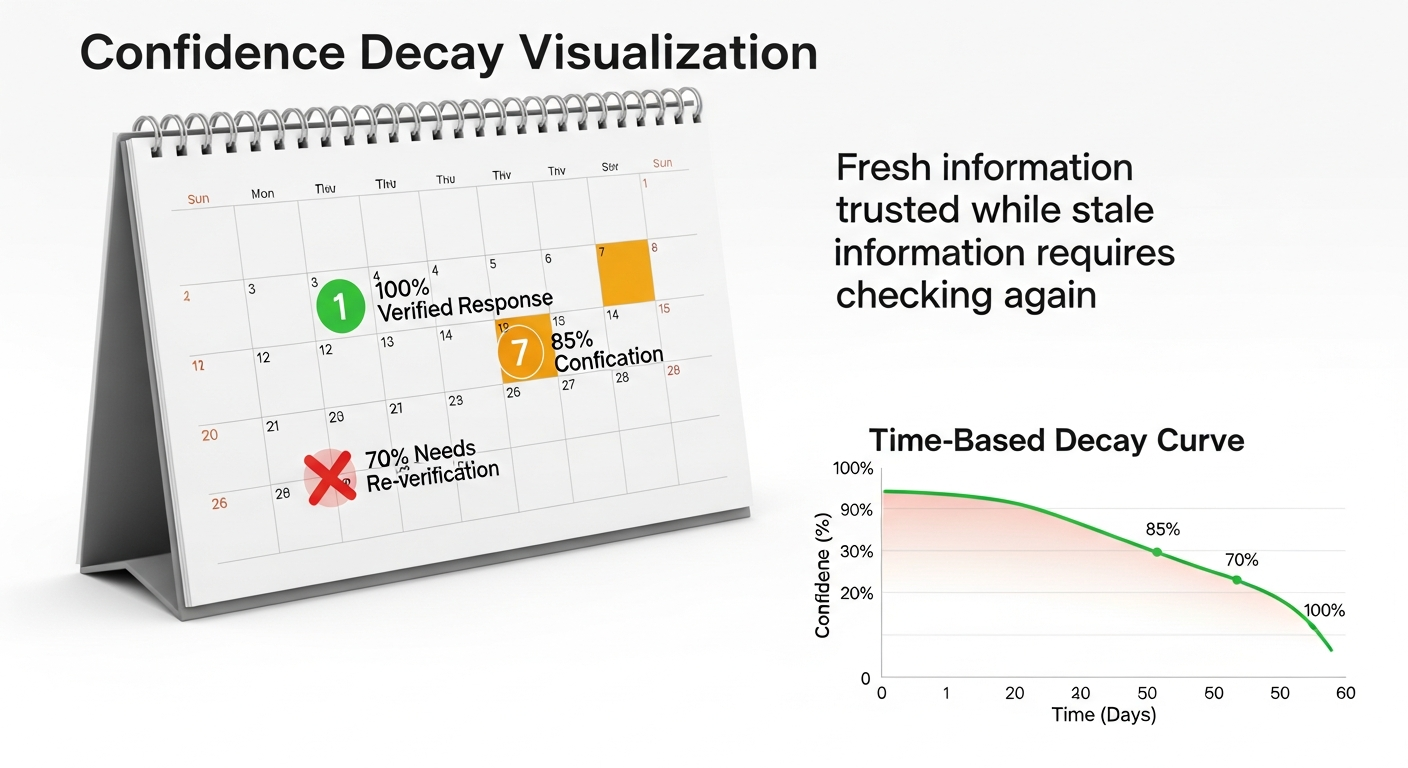
Layer 3: Temporal Confidence Decay

Information confidence degrades over time. Facts from 2020 are flagged as potentially stale. Users see freshness indicators alongside answers.

Graceful Degradation

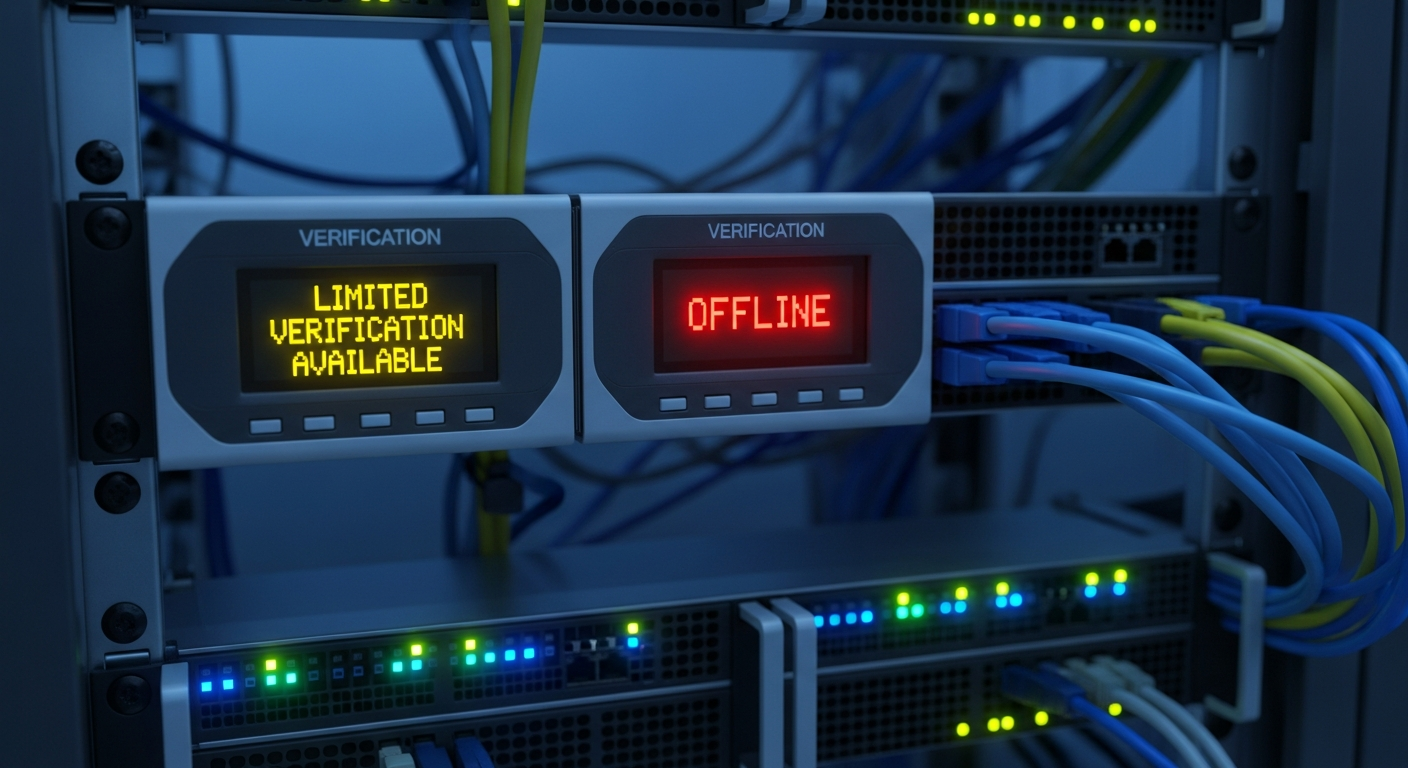
Layer 4: Graceful Uncertainty

When uncertain, AI admits it. "I'm not confident about this" replaces false certainty. Honesty about limitations builds trust.

Hallucination Block

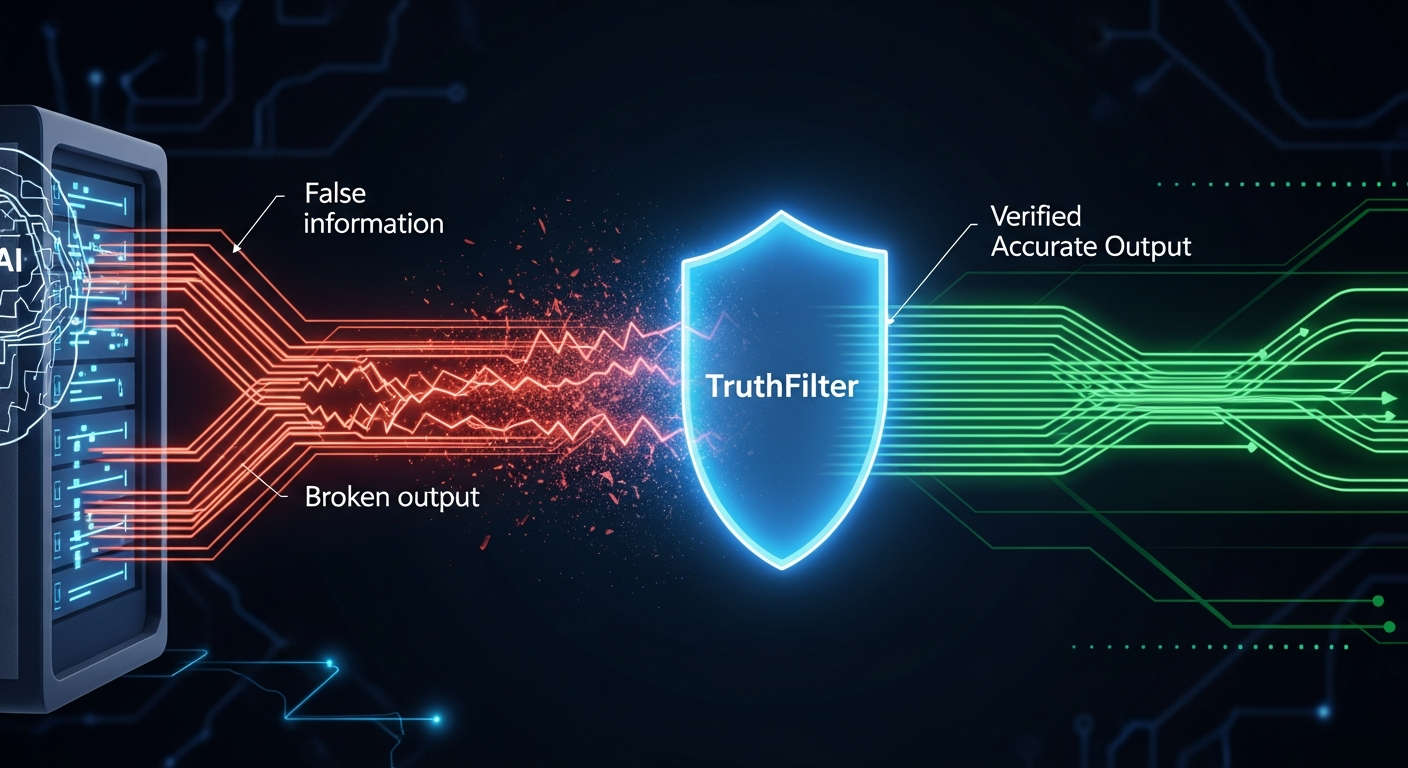
Layer 5: Hard Hallucination Block

When verification fails, the claim is blocked entirely. No hallucination reaches the user. Better to admit ignorance than to lie.

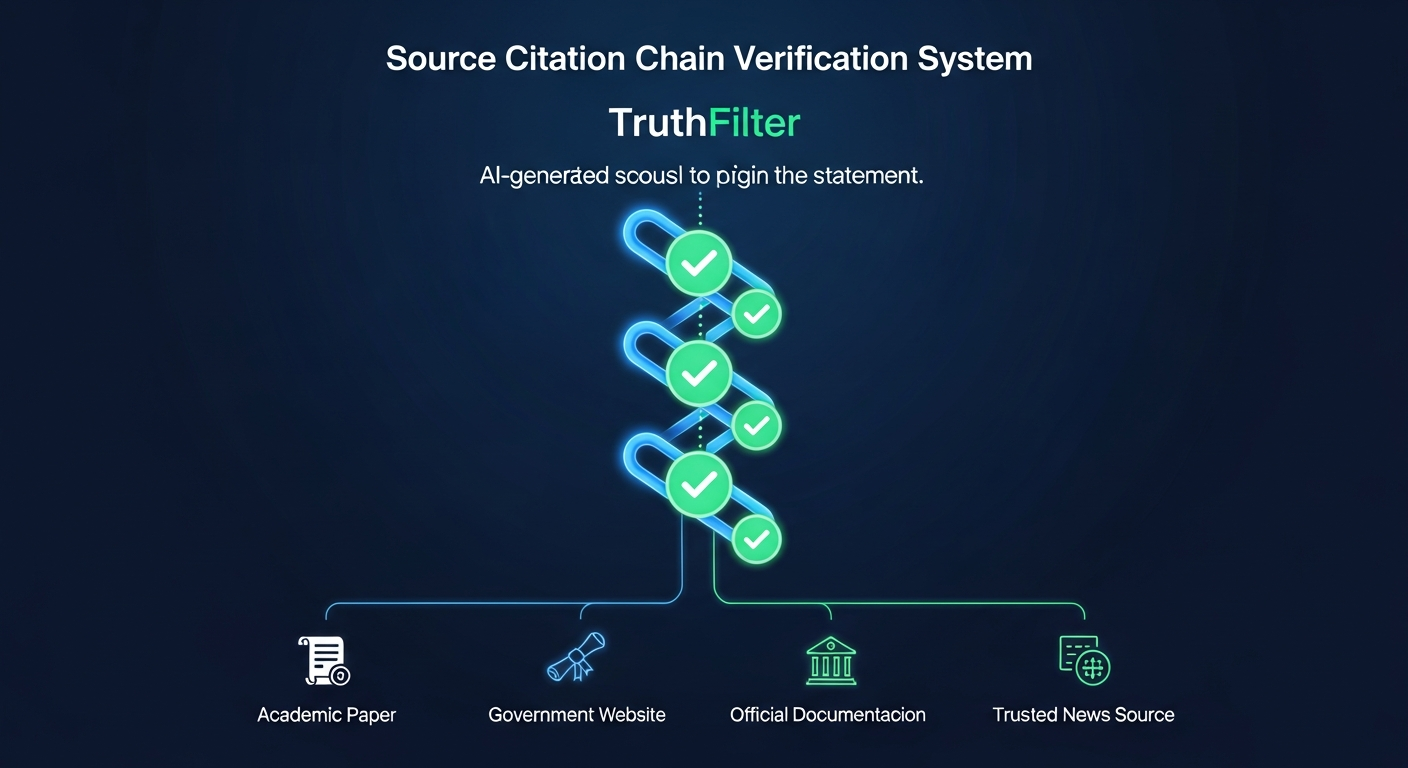
Citation Chain

Verified Citation Chains

Every cited source is verified to actually exist. Links are checked. Quotes are confirmed. No more phantom references.

31 Claims of Truth Protection

TruthFilter's comprehensive anti-hallucination system is protected by 31 claims covering every verification layer and mechanism.

1
Independent Claim

Multi-Layer Truth Verification Architecture

What This Claim Protects

The core system architecture that implements multiple verification layers to catch and prevent AI hallucinations before responses reach users.

Block Check

Technical Elements Protected

  • Sequential verification pipeline with progressive confidence scoring
  • External source cross-referencing for factual claims
  • Internal consistency checking across response segments
  • Confidence threshold gates at each verification stage
  • Hallucination detection heuristics based on linguistic patterns
  • Response blocking when verification fails
99.7%
Detection Rate
5
Verification Layers
sub 200ms
Verification Time
Dependent Claims (2-10)
2-4
External source verification with real-time web search, database lookup, and citation validation.
5-7
Cross-agent verification protocols with consensus requirements and disagreement resolution.
8-10
Confidence scoring algorithms with temporal decay and uncertainty communication.
11
Independent Claim

Graceful Uncertainty Communication

What This Claim Protects

The system for communicating AI uncertainty to users in natural, helpful ways rather than false confidence or complete silence.

Technical Elements Protected

  • Uncertainty quantification in human-understandable terms
  • Graduated confidence indicators (high/medium/low/unknown)
  • Alternative suggestion generation when primary answer is uncertain
  • Source strength indicators for supported claims
  • Explicit admission of knowledge boundaries

Why This Matters

Current AI either lies confidently or refuses to answer. TruthFilter enables a third option: honest uncertainty. "I think X, but I'm not certain" is more useful than confident lies or silent refusal.

Common Man Trust

AI You Can Finally Trust

Imagine asking AI for medical information and knowing it's accurate.

Imagine using AI for legal research without fear of fake citations.

Imagine trusting AI-generated content for your business.

TruthFilter makes AI trustworthy for the first time.

$381M
Patent Valuation

Essential for enterprise AI, medical AI, legal AI, financial AI, and any application where accuracy isn't optional. As AI regulation increases, verification becomes mandatory.